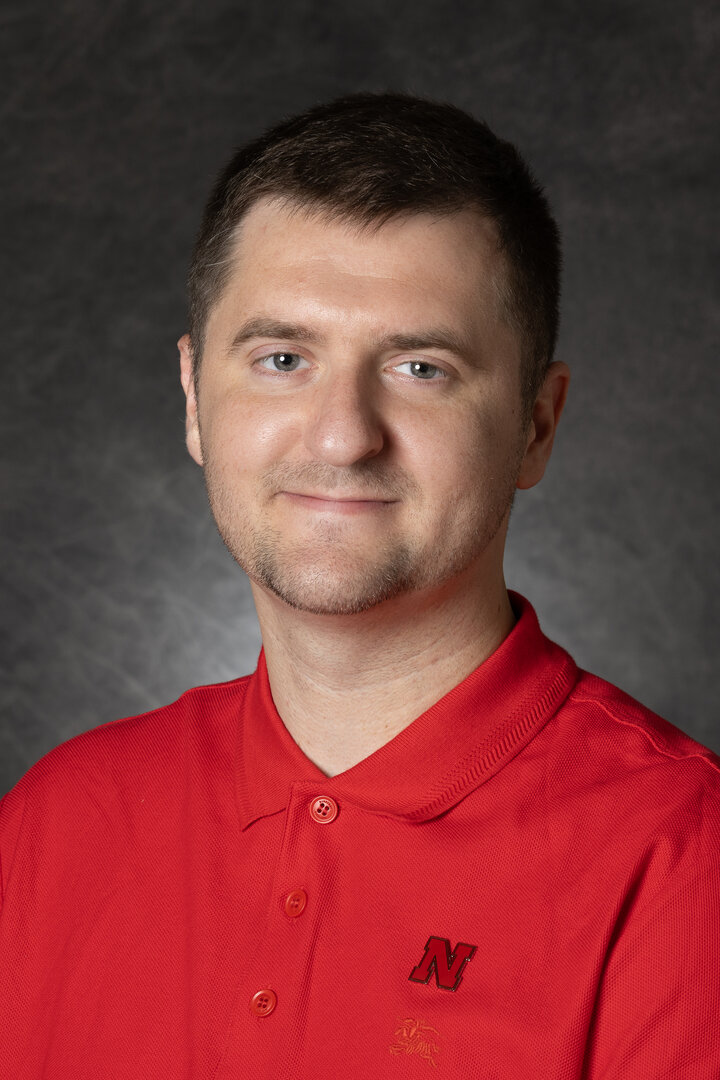
William Salloom, Ph.D.
Assistant Professor
William Salloom earned his Ph.D. in Integrative Neuroscience through the PULSe program at Purdue University in the Department of Speech, Language, and Hearing Sciences. His dissertation focused on the temporal dynamics of the medial olivocochlear efferent system in humans, examined using psychoacoustic and otoacoustic measures with mentorship from Dr. Elizabeth Strickland (Psychoacoustics lab). Following his Ph.D., he completed a postdoctoral fellowship in the Auditory Physics Group at the University of Southern California with mentorship from Dr. Christopher Shera. During his postdoctoral training, he investigated direction and rate dependencies of frequency sweeps in psychoacoustic and otoacoustic responses. Dr. Salloom is currently an assistant professor directing the Auditory Mechanics and Perception Lab in the Department of Special Education and Communication Disorders at UNL. His research focuses on how the auditory periphery, particularly the cochlea, processes sound in typical hearing. He is also interested in how this processing changes with normal aging and with hearing impairment. His work uses psychoacoustic and physiological approaches to investigate these questions.
Graduate Students
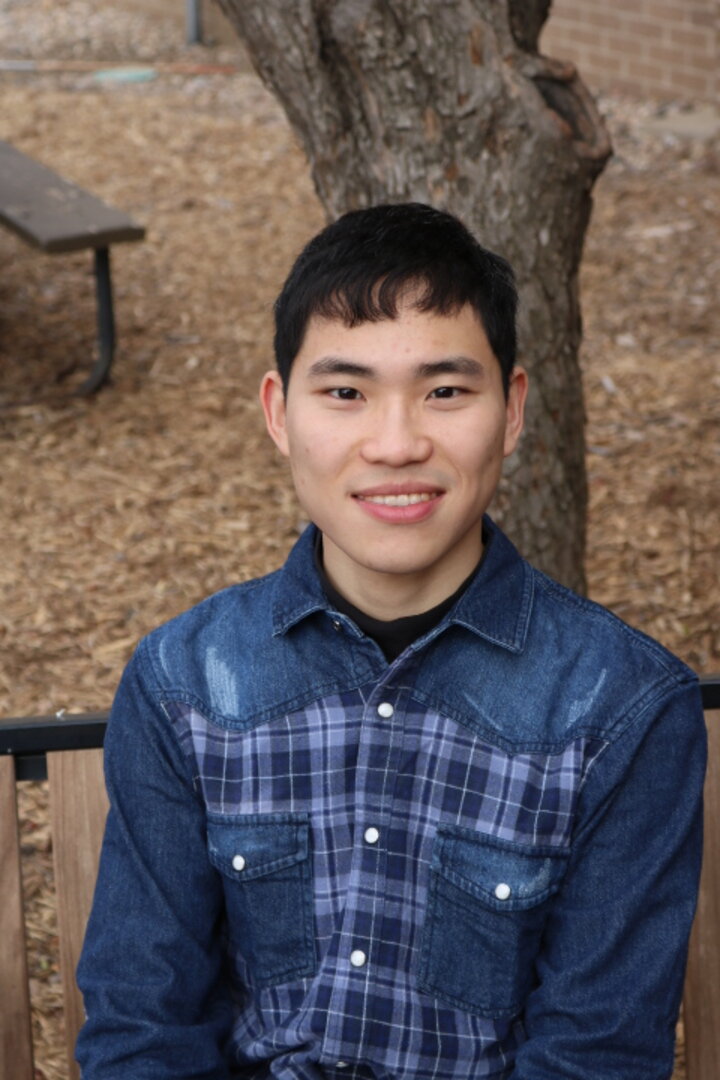
Cheng-Han Chou
Cheng-Han Chou (Han) earned his B.S. in Audiology from Mackay Medical University in the Department of Audiology and Speech-Language Pathology in Taiwan. After completing his fourth-year audiology internship and passing the national Senior Professional and Technical Examinations, he worked as a licensed audiologist in hearing aid dispensing centers, a hospital, and for a hard-of-hearing welfare association. Han decided to further develop his clinical and research skills and enrolled in the Doctor of Audiology (Au.D.) program at the University of Nebraska–Lincoln. Under the mentorship of Dr. Marc Brennan and his current mentor, Dr. William Salloom, his research focuses on exploring the impact of stimulus level, signal frequency, age, and hearing status on Gaussian noise disruption using a psychoacoustic forward masking paradigm. His work aims to better understand how auditory processing and sound perception are affected under complex listening conditions. Han will begin his fourth-year audiology externship at a local ENT specialty clinic in Lincoln, Nebraska. Outside of academics and clinical work, he enjoys spending time with friends and swimming.
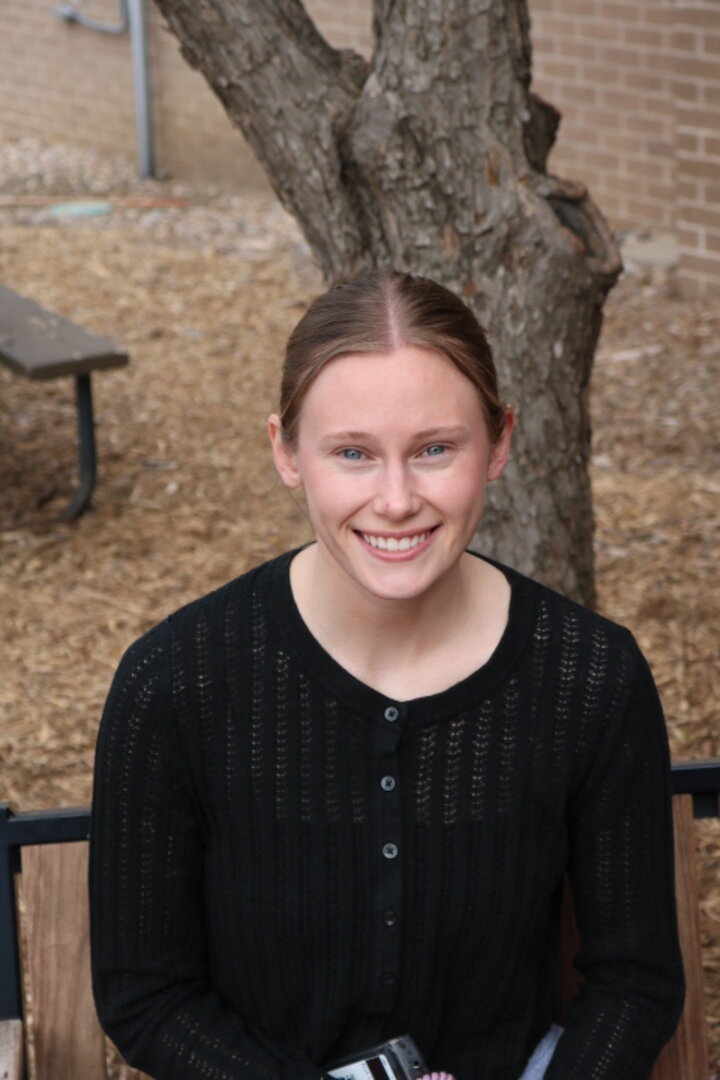
Ella Lilleberg
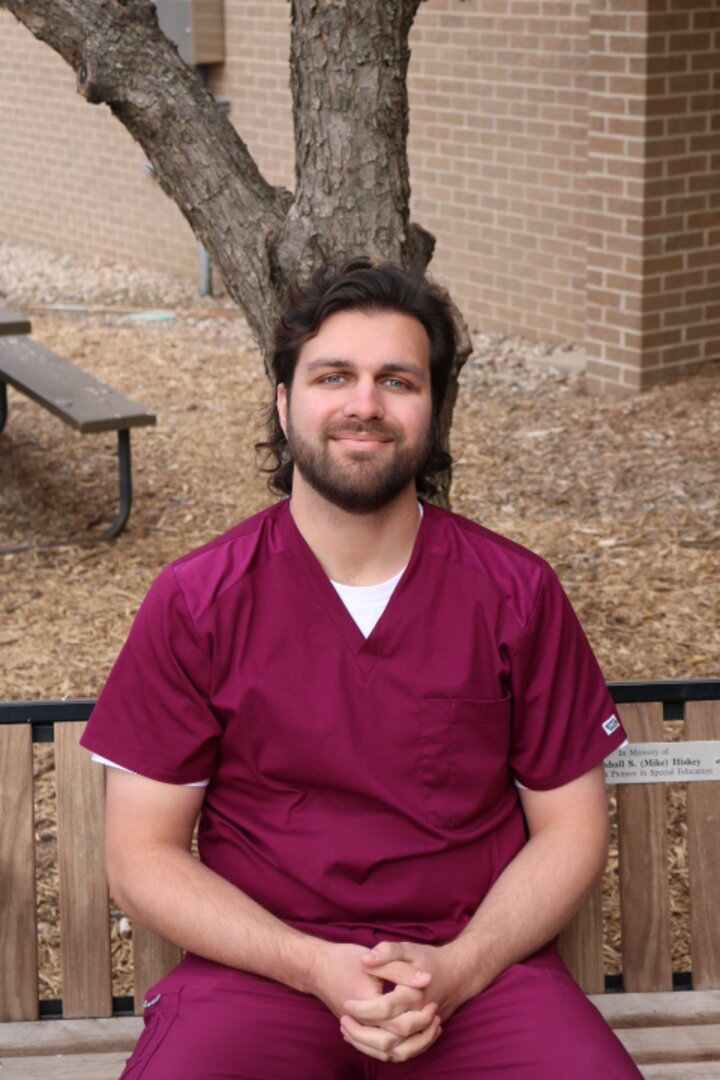
Sam Aguilar
Undergraduate Students

Anna White
Anna White is an undergraduate senior at the University of Nebraska-Lincoln majoring in Communication Sciences and Disorders with a specialization in Audiology and a minor in Education. She plans to pursue both a clinical Doctorate of Audiology (AuD) degree as well as a Doctor of Philosophy (PhD) degree in Human Sciences with a specialization in Communication Disorders and an emphasis in Audiology. Here, her interests focus on using a clinician-scientist approach to conduct research and develop evidence-based practices (EBP) to be used in educational settings for deaf and hard of hearing children beyond just the implementation of existing methods. Ultimately, she understands that auditory mechanisms and perception are needed to understand how hearing loss, age, acoustics, and background noise affect both areas and how we can properly calibrate hearing aids and instructional devices, create effective lesson plans, and more from these findings within the classroom. Outside of academics, she enjoys creative projects such as woodworking, drawing, and knitting in addition to physical exercise such as hiking.